
EPR
How to Avoid EPR Tax on Residential Pallet Deliveries: The Ultimate Closed-Loop Take-Back Guide for UK Businesses
The introduction of the UK’s Extended Producer Responsibility (EPR) for packaging regulations has fundamentally transformed the financial landscape for manufacturers, distributors, and retailers. If your business relies on wooden pallets to transport goods across the country, you are no longer just responsible for the logistics of delivery—you are legally and financially accountable for the lifecycle of that packaging waste.
For companies shipping heavy, bulky, or high-volume goods directly to consumers (Business-to-Consumer, or B2C distribution), the financial stakes are exceptionally high. Under the EPR framework, pallets delivered to households face the strictest reporting mandates and the heaviest tax penalties.
However, by transitioning to an intelligent, branded, closed-loop take-back system, your business can structurally divert transit timber from municipal waste streams, delight eco-conscious consumers, and legally mitigate or completely eliminate your EPR packaging tax liabilities.
Here is a comprehensive breakdown of how the EPR tax affects residential pallet deliveries and how utilizing an integrated manufacturing and recovery network can protect your bottom line.
Understanding the EPR Tax: Why Residential Pallets Cost More
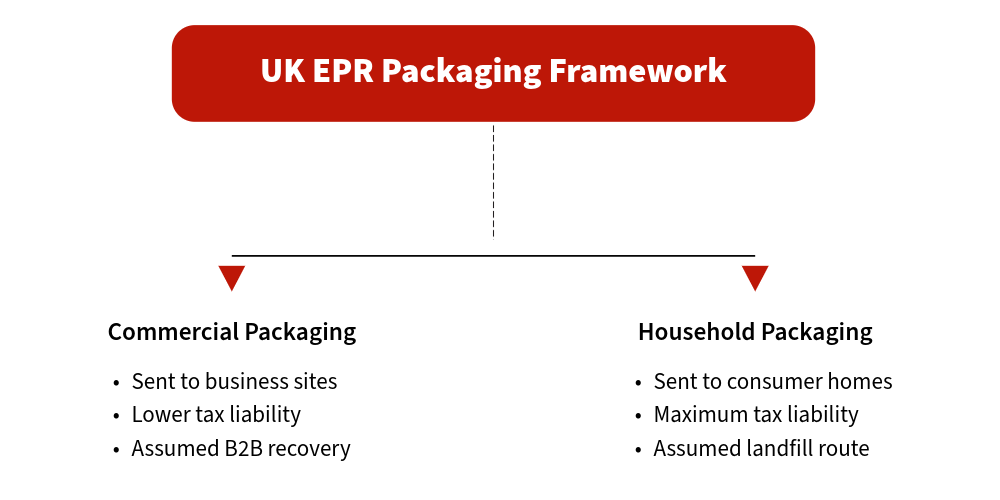
To understand how to avoid EPR penalties, you must first understand how the UK Environment Agency categorises packaging waste. The EPR framework splits packaging into two primary streams: Commercial/Industrial Packaging and Household Packaging.
When a pallet is delivered to a business address (B2B), it is assumed that the recipient has commercial waste handling systems or pallet exchange contracts in place. The tax burden is relatively low because the wood stays within the industrial ecosystem.
However, when a company ships goods—such as garden turf, building materials, bricks, landscaping stones, hot tubs, or large home appliances—on a wooden pallet directly to a residential property, that pallet automatically triggers the Household Packaging classification.
The “Household Waste” Penalty Trigger
The Environment Agency assumes that a residential consumer has no means of recycling a heavy industrial pallet. Consequently, the government anticipates that the pallet will either:
- Be broken up and thrown into municipal household waste bins.
- Be driven to a local council civic amenity site (household waste recycling centre).
- Become an environmental hazard through fly-tipping or unsafe backyard burning.
Because local councils bear the financial burden of collecting and processing this residential waste, the EPR framework passes 100% of these “public management costs” directly back to the producer. If you are the brand owner or the importer who first placed that product onto the pallet for domestic delivery, you are hit with the maximum EPR fee matrix to subsidise council waste management.
The Strategic Escape: Building an Airtight Closed-Loop Take-Back Scheme
The good news is that the EPR legislation is not designed purely as a punishment; it is designed to drive systemic behavioural change toward a circular economy. The regulations explicitly state that if a business can provide clear, verifiable evidence that its transit packaging is part of a managed reuse or recovery system, its taxable obligation can be drastically reduced or completely offset.
To prove to EPR auditors that your residential pallets should not be taxed as household waste, you must establish an end-to-end recovery loop. This loop intercepts the pallet at the consumer’s home before it ever touches municipal waste infrastructure.
Executing this strategy successfully requires seamless integration between three distinct phases: intelligent manufacturing, clear consumer communication, and flexible nationwide logistics.